
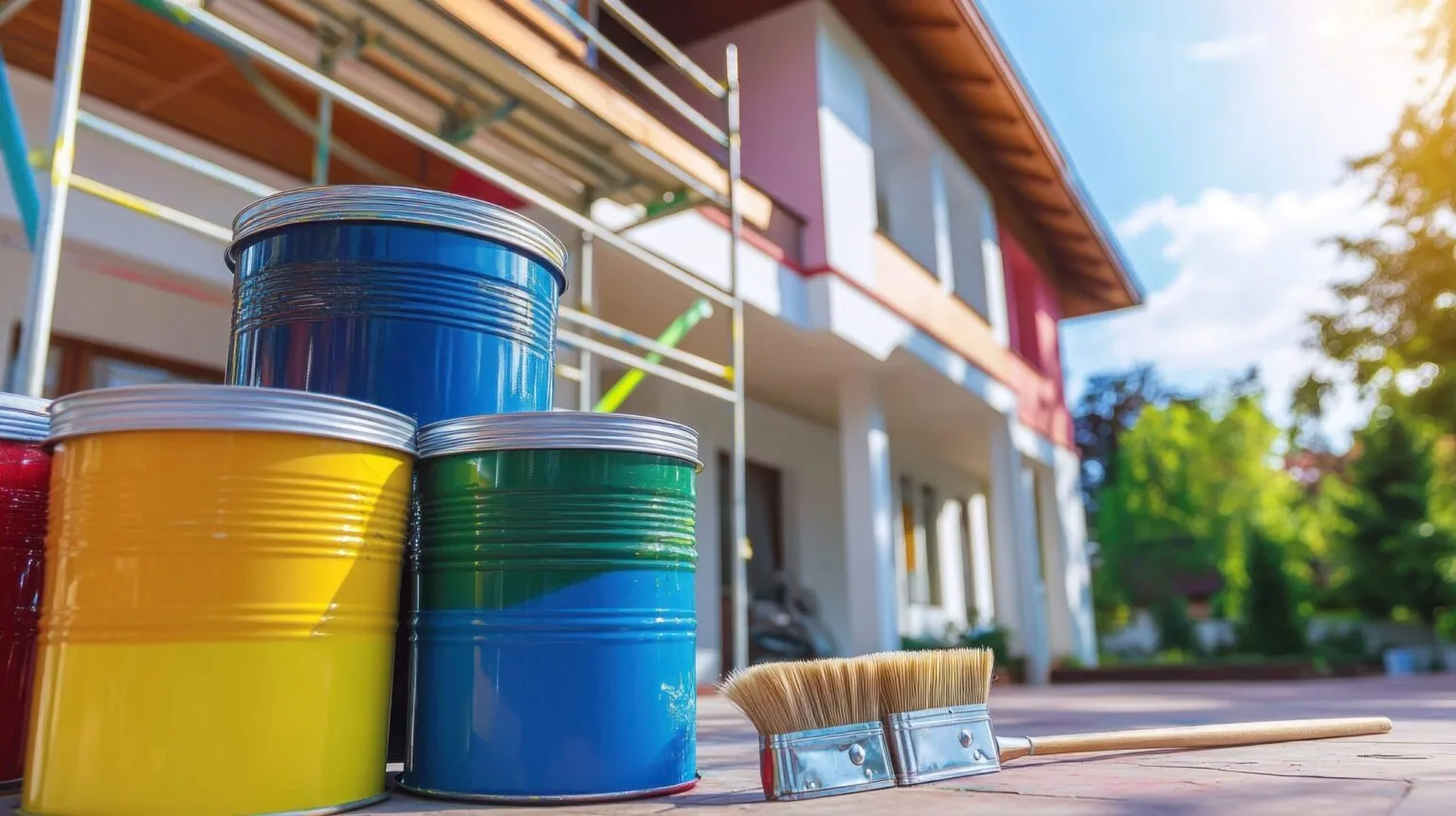
Our shop is in Fernley, 38 miles north — about 45 minutes down US-50 through the Carson River corridor. Dayton is Nevada's oldest settlement, going back to placer gold in Gold Canyon in 1849, and most of its houses are among Nevada's newest: the tracts in Dayton Valley, Santa Maria Ranch, Riverpark and along the river that went up from the 1990s through today. We paint both ends of that, inside and out.
What Dayton's sun and winters do to a paint job
Dayton sits at about 4,400 feet, which means roughly 10 to 15 percent more ultraviolet than the same house would take at sea level. UV breaks down the binder that holds pigment to the wall, and the loose pigment powders off — that's the chalk on your palm when you run a hand down the south side. Summer afternoons run into the 90s while the nights drop to the 50s, so everything on the wall expands and contracts every day, and from November into March the surface crosses freezing and back most nights. So does any water sitting in a hairline stucco crack. It's why the south and west elevations go first while the north side still looks almost new.
Dayton Valley, Santa Maria Ranch and Riverpark: stucco on its first repaint
The bulk of Dayton's housing is tract stucco built from the 1990s into the 2020s — Dayton Valley around the golf course, Santa Maria Ranch, which is planned for more than 2,200 home sites across 954 acres and has been building since the mid-2000s, Riverpark, and the streets along the Carson River. Much of it is on its first real repaint, and that looks different from an old house: the thin original coat still fine on the north side and giving up on the south and west. Portland-cement stucco is alkaline — fresh, it runs pH 12.5 to 13 — so patches need about 28 days to cure and an alkali-resistant masonry primer under the finish, and a 100 percent acrylic finish resists that alkali far better than oil. White chalky deposits coming through the wall are efflorescence: salts carried out by water moving through the stucco. Find the sprinkler head or the bad flashing first, or it comes straight back through the new paint.
If your association hands you a palette, we paint inside it
The master-planned communities in Dayton run architectural review with restrictions on exterior colours, and the older rural lots up the canyon mostly have none. Either way, get your final colours signed off by your association before we start — that approval is theirs to give, not ours and not the paint store's. Bring us the approved sheet and we'll price it from there.
Old Dayton: the town that was here before the Comstock
The old town along Pike Street and around the historic centre holds houses and buildings from Dayton's mining days and the decades after, and they are wood: siding, trim, porch posts, sash windows. Wood moves more than stucco and holds moisture, so paint there peels and lifts rather than chalks. The job is scraping back to sound paint, spot-priming bare wood, and caulking the joints before any colour goes on. One thing to know before you call: houses built before 1978 can carry lead-based paint under the newer coats, and that changes how the prep has to be done. Tell us the age of the house up front and we'll plan around it.
When exterior work can actually happen in Dayton
Overnight lows average below freezing from November into March, and coatings need enough warmth through the night to cure, so exterior repaints run spring through fall. The afternoon wind that comes down the Carson River corridor in summer carries dust into wet film and overspray onto your neighbour's car, so exterior spraying belongs in the morning. Interior work, cabinets, and drywall and plaster repair we do year-round — winter is the easy time to get those on the schedule.
What we get called out for in Dayton, most often:
- Exterior repaints — stucco, siding and trim
- Interior painting — walls, ceilings, doors and trim
- Cabinet refinishing
- Commercial interiors and exteriors
- Decks, fences and patios — clean, paint and seal
- Plaster and drywall repair, skim coating
- Wallpaper removal
- Prep: scraping, caulking, priming, sanding
Why homeowners keep calling us back
Robert Goormastic started this business in 1988 as Wine Country Painting in Santa Rosa, California, and moved it to Fernley in 2002. Thirty-plus years, same trade, still family owned and operated. We're rated 5.0 on Google and 5.0 on HomeAdvisor. Estimates are free and good for 90 days. We stand behind our work with a firm satisfaction guarantee: we don't consider a project complete until you're satisfied.
Questions we get from Dayton homeowners
You're in Fernley. Do you really come to Dayton?
Yes. It's 38 miles and about 45 minutes on US-50, and Dayton has been part of our service area along with Fallon, Sparks, Spanish Springs and Reno. The estimate is free in Dayton the same as it is in Fernley.
My HOA has an approved colour list. Can you work from it?
That's no trouble. Get your final choice approved by your association before we start — that decision is theirs, not ours and not the paint store's — and we'll paint whatever comes back approved.
How soon can new stucco or a fresh patch be painted?
Give portland-cement stucco about 28 days to cure. It comes out of the mixer around pH 12.5 to 13, and coating it while it's still that alkaline is how you end up with a finish that discolours or lets go within a season.
My house is in old Dayton and is well over 50 years old. Is that a different job?
It is. Wood siding and trim peel rather than chalk, so the prep is scraping, spot-priming and caulking rather than washing and back-rolling. And houses built before 1978 can have lead-based paint under the top coats, which changes how the surface has to be prepared. Tell us the age of the house when you call and we'll plan for it.
What time of year should I book exterior work in Dayton?
Spring through fall, and mornings in summer. Overnight lows average below freezing from around November into March. Interior work and cabinets we do year-round.